Rafael Aguirre in Interview with Thérèse Wassily Saba
On Sunday 19 July 2026, two important Spanish events were happening on the same evening: Spanish guitarist Rafael Aguirre was making his BBC Proms debut, performing the Concierto de Aranjuez by Joaquín Rodrigo with the Spanish National Orchestra conducted by David Afkham at the Royal Albert Hall in London, commencing at 7pm; and the Final of the FIFA World Cup 2026, with Spain playing against Argentina was being broadcast worldwide from New York, which was starting at 8pm in London. In our recent interview, after his brilliant BBC Proms performance, I realised it was the Fates that had placed Rafael Aguirre in London that evening, rather than in New York representing Spain as a footballer! Read on.
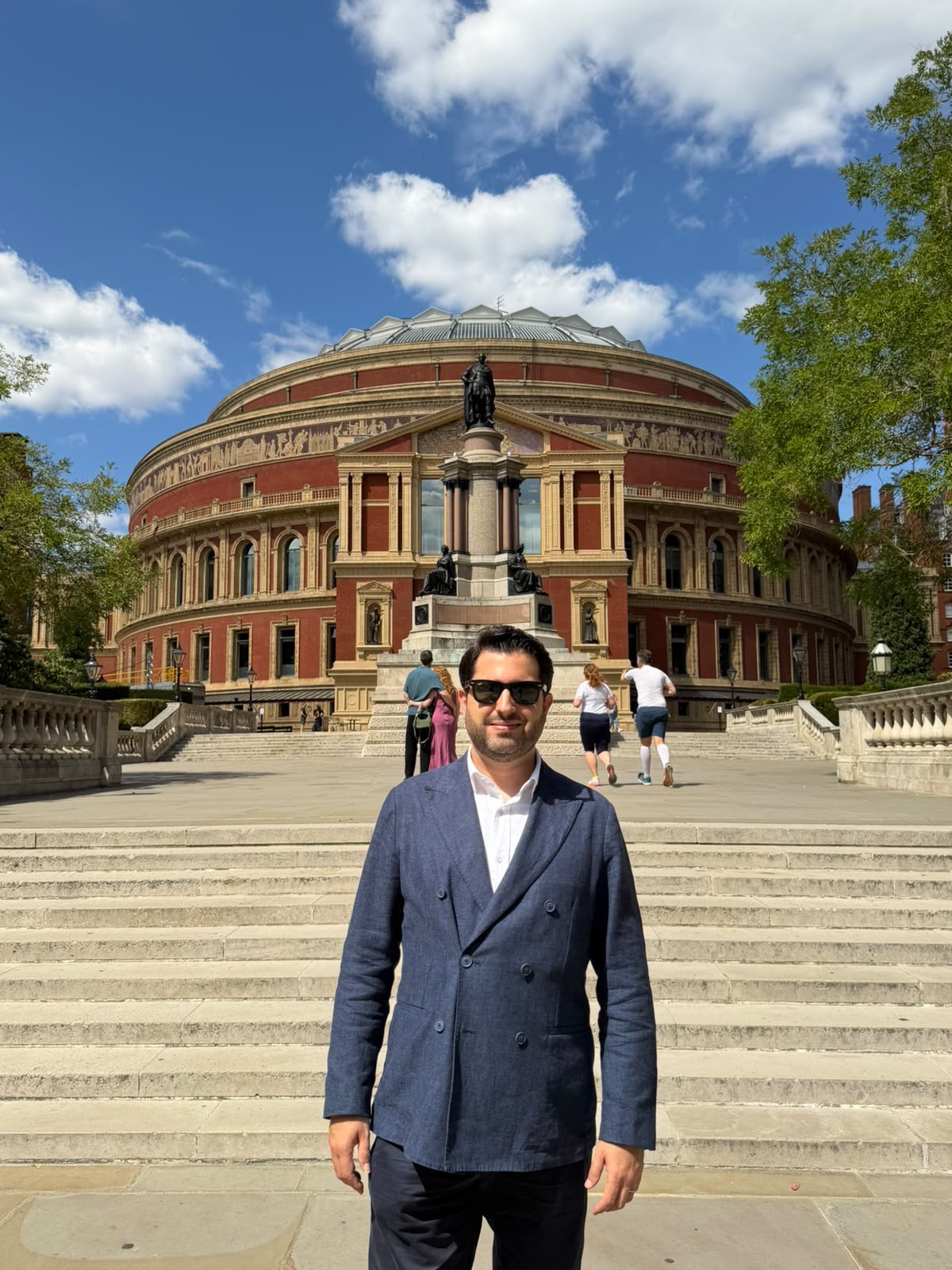
Malaga-born Rafael Aguirre is a cosmopolitan musician, having spent many years studying in Germany and in London, he now resides with his wife and young daughter in Mexico City. This was his first performance at the BBC Proms but certainly not his first performance of the Concierto de Aranjuez.
Rafael: The first time I played the Concierto de Aranjuez was in 2001, so now it is the 25th anniversary of my first tour. While I was studying in Malaga at the Conservatorio superior de música, my teacher approached me, saying there was a possibility that I could make a concert tour. I was 16 years old; I had never played a concert tour in my life. My teacher explained: ‘You can make a tour playing Concierto de Aranjuez by Rodrigo with the youth orchestra of Malaga. The orchestra members were even younger than me; they were 10 or 11 or 12! And then my teacher told me that I had to learn it in two or three weeks. And I said, yes, no problem – when you are 16, nothing is a problem.
Through my solfeggio lessons, I always knew what note I was hearing. I like piano a lot, so when my father bought the CD recording of the English Chamber Orchestra playing the Mozart Piano Concerto no. 21 in C major with Daniel Barenboim as soloist, while I was listening to Barenboim, I was saying: do, sol, do, mi, fa… This is also how I learned Rodrigo’s Concierto de Aranjuez. I had listened to the Narciso Yepes recording about 1,500 times when I was a child, while I was playing video games. Everyone was saying to me, ‘this is a very famous piece’, the Concierto de Aranjuez, so I put the cassette tape on and started singing along: fa, fa, fa, fa, fa, fa, fa, sol, mi.
I remember when they gave me the score, the first thing I thought is, okay, this cannot be so difficult. It must be like the recording, fa, fa, fa ,fa …. So, I told myself, okay, I have to do this and then add the rasgueado. And for all those scales – there are almost 200 scales in the Concierto de Aranjuez – I didn’t work out my fingerings. It was more like when you play a jam session as a jazz musician and you know you have to play the scale, so you just play the scale. It was all, like they say in German, durcheinander – a form of chaos.
So, this is how I learned the Concierto de Aranjuez. Once I got the score, it was like being a fan of Elton John, where you know all of his songs. You just go to his concert and you sing all the lyrics with Elton John. For me, it was the same as learning the songs of your favourite pop singer.
That’s why it was not that scary for me. What was scary is when I had the audition for the conductor! The conductor was not Spanish; he was from Estonia, from Tallinn, and had trained at the Tchaikovsky Conservatory of Moscow. His voice was deep and at the first rehearsal, he simply said: ‘primer movimiento’ (‘first movement’). He was the solo cellist of the Malaga professional orchestra, so he was a very good cellist and was also a teacher at the Reina Sofia School of Music in Madrid. So, ‘primer movimiento’, I played until maybe the first famous scale with the triplets. Then he said: ‘gracias. Segundo movimiento’. Then, ‘Tercer movimiento’. When we finished, I was still there on stage in the conservatory and I could see my guitar teacher and the Estonian conductor talking privately at the back of the hall. It was like waiting for the score on one of those television programmes like X Factor. I was just a 16-year-old and totally tanned because I was living in Malaga. Then he said: ‘OK, Rafael, come, come’. So I went with my guitar and he said: ‘You are coming with us on tour.’
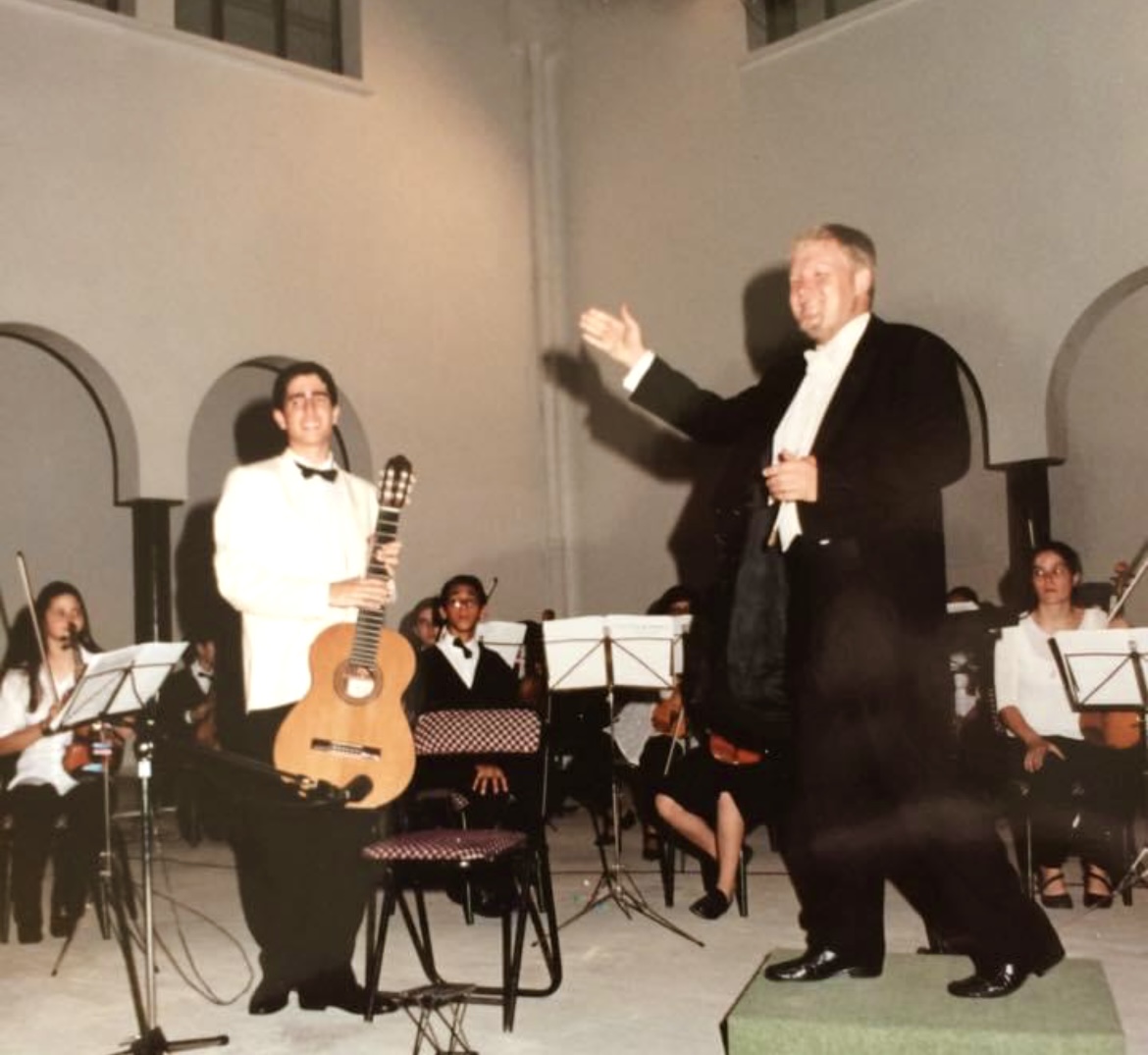
That was one of the few auditions that I have had to do in my life. Today’s auditions mostly involve you sending an email to somebody with your programme and asking if they are interested? OK, no, yes. Most of the time, it’s a no, no. It’s 200 NOs and one YES! And this is how everything started.
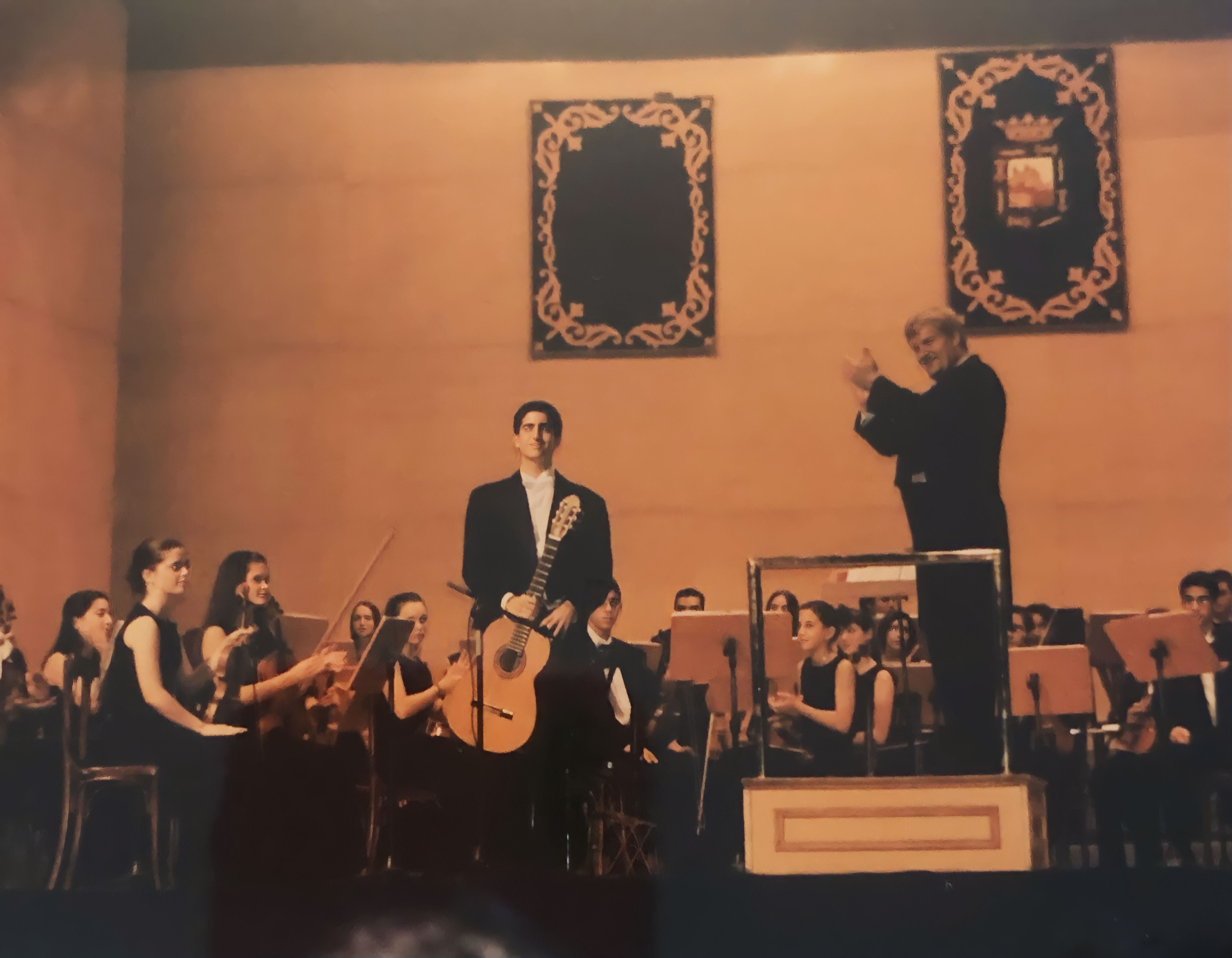
On that tour, I played the Concierto de Aranjuez around 20 times, over a period of three or four months. We started in Jerez de la Frontera, performing at Teatro Villamarta for 1,200 people. Then we played in the Malaga theatre and even toured in Morocco. We also played in a lot of villages and in the city where I started my solfeggio lessons in Arroyo de la Miel, Benalmádena Costa.
That tour was one of the best forms of training that I could have had as a guitarist. Now when I go to see, for example, the Tárrega competition finals and other competitions that have a guitar concerto in the finals, I see that the guitarists play very well as soloists, but when they have to play with an orchestra, they often they are not playing in time, or they are trying to catch up after playing a scale and then the conductor gets mad. Because of my early training, today, when I play with a professional orchestra, it’s super easy for me because they play what is written on the score.
Did your performance change during those initial 20 performances?
Rafael: I think I played pretty much the same in the 20 concerts, but probably some years later, like a good wine, things started changing. And then, when I was in my early 20s, I started to panic a little because I was no longer so naive. I became fully aware of how difficult that concerto is and I started to think about finding proper fingering for it! I studied and prepared very, very well with Joaquin Clerch for my competitions. I also won some competitions like the Almeria Julian Arcas playing that concerto.
And the loss of your football career?
Rafael: Yes, I was not very keen to start playing guitar when I was eight – I wanted to play football. Football is very popular. We played on the street because it’s always sunny and this is what I wanted to do. I thought I would become a football player because I have the mentality of a sportsman. I’m a very competitive person. If get frustrated trying to do something, when I wake up next day, I decide to try it 200 times more. I have this type of mentality, when I do everything. It’s not a very good thing sometimes.
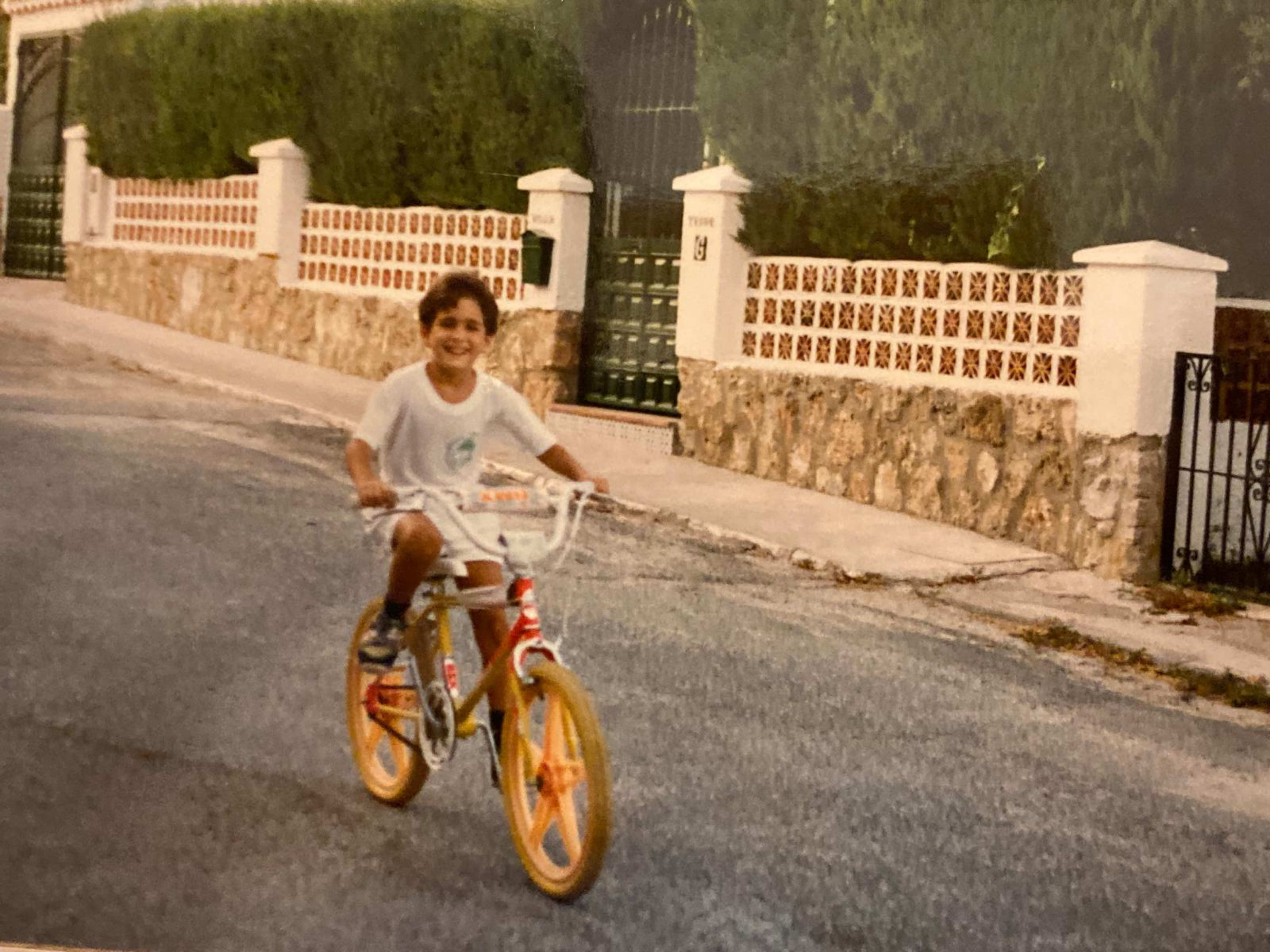
I told my mother that I wanted to go to football school because I was a very good goalkeeper; I was very good with my hands. I like to talk about it because people don’t believe it but I had three pom-pom girls calling out Ra-Fa-El, positioned at the end of the field. They were seven years old. Once I got hit by a ball on my mouth, my lips were bleeding and I was knocked to the ground. The girls came running to me, Rafael, are you OK? I was like, yes, I’m OK. Let’s continue; I was so competitive! I did manage to block the ball with my mouth though, so they didn’t score a goal and I was very happy.
When the time came, my mother said: ‘You know, you have very good musical ear.’ My mother plays piano but the problem in my family is that everybody wanted to be a musician but they were never allowed. I am the first generation who has been allowed and, of course, I wanted to do something else. I didn’t understand why people studied music? I thought, if you want to play, yes play, but studying music; I had already had enough with being at school, and I just wanted to play football! But my mother did not give up.
I come from a generation where you didn’t start playing an instrument until we had done one year of solfeggio lessons, of reading scores and singing and a lot of melodic dictation; that was very difficult for a seven-year-old boy, even with my ear. After my first solfeggio lesson, in a class where everyone was maybe 25 or 30 years old and I was 7, and the teacher was 55 or 60 with grey hair, I didn’t understand anything at all and I went home crying. I thought, when I see my mother, I will tell her that it makes no sense to study it because I don’t even know how to play an instrument.
But then I started to study the guitar with Teresa García de Candido and Teresa is the loveliest person. She gently guided me: ‘You have to put the hand like this. OK, let’s do the open strings. Then, do, re, mi, fa, sol.’ And I thought: ‘Wow, that’s so easy for me!’
So yes, everything came by accident. I didn’t want to be a musician. I chose guitar because my older brother chose piano and we only had piano and guitar lessons in my small town. I love piano, but maybe with the piano, you need to be like Evgeny Kissin. It would be very challenging for me, but I still want to learn.
Listening to your BBC proms performance, I felt an extra strong connection between you and the orchestra with regard to the sense of pulse. Was that because it was the Spanish National Orchestra?
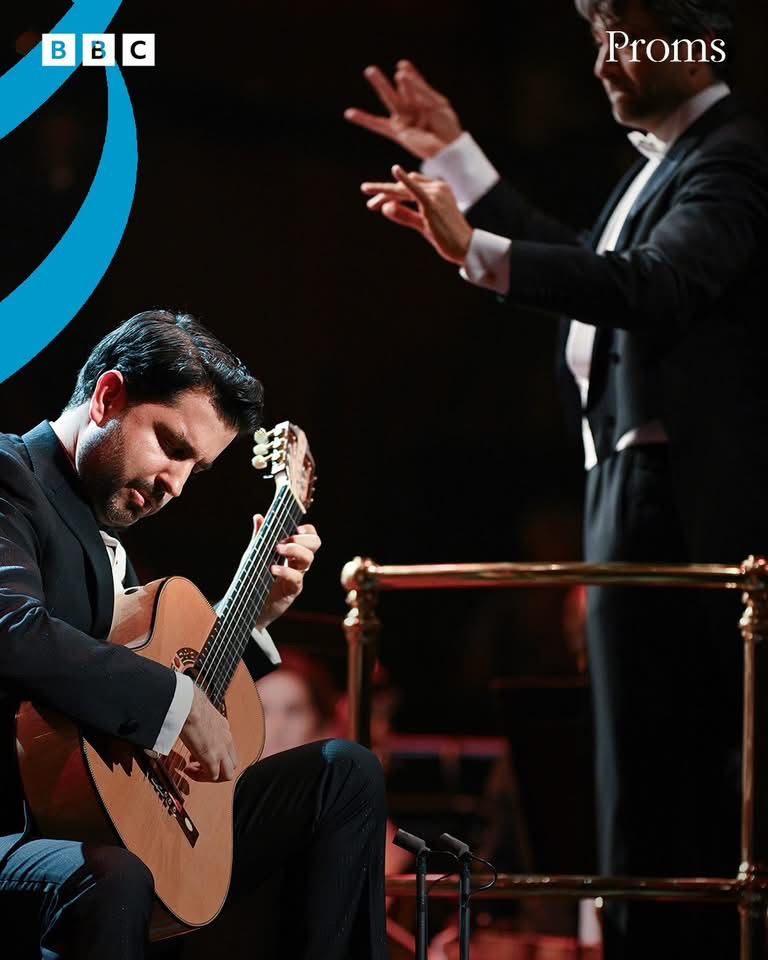
Rafael: Yes, Yes and no. I think there is a kind of globalisation in orchestras nowadays. But Rodrigo is like Manuel de Falla, and yes, it’s on the beat. Of course, not everybody in the Spanish National Orchestra is Spanish. If you look at the Berlin Philharmonic nowadays, there are many foreigners, including Spanish players. But in the case of the Spanish National Orchestra playing Spanish repertoire, of course, all the orchestra members live in Spain where we are surrounded by Spanish music, even hearing Falla’s music in advertisements on Andalusian TV, so you have an unconscious osmosis with Spanish folk music. But I love when British orchestras perform the Rodrigo; I think they do it amazingly well. British orchestras have this sense of versatility, which is quite amazing; they can play anything in style. This is not necessarily the case with other orchestras in the world. When I saw Simon Rattle conducting the Concierto de Aranjuez with Cañizares as soloist, it was one of the best accompaniments that I have heard in my life. I was living in Germany and they played it in Madrid.
Yes, that was on 1 May in 2011 – it was the European Concert, with Simon Rattle conducting the Berlin Philharmonic in the Teatro Real of Madrid.
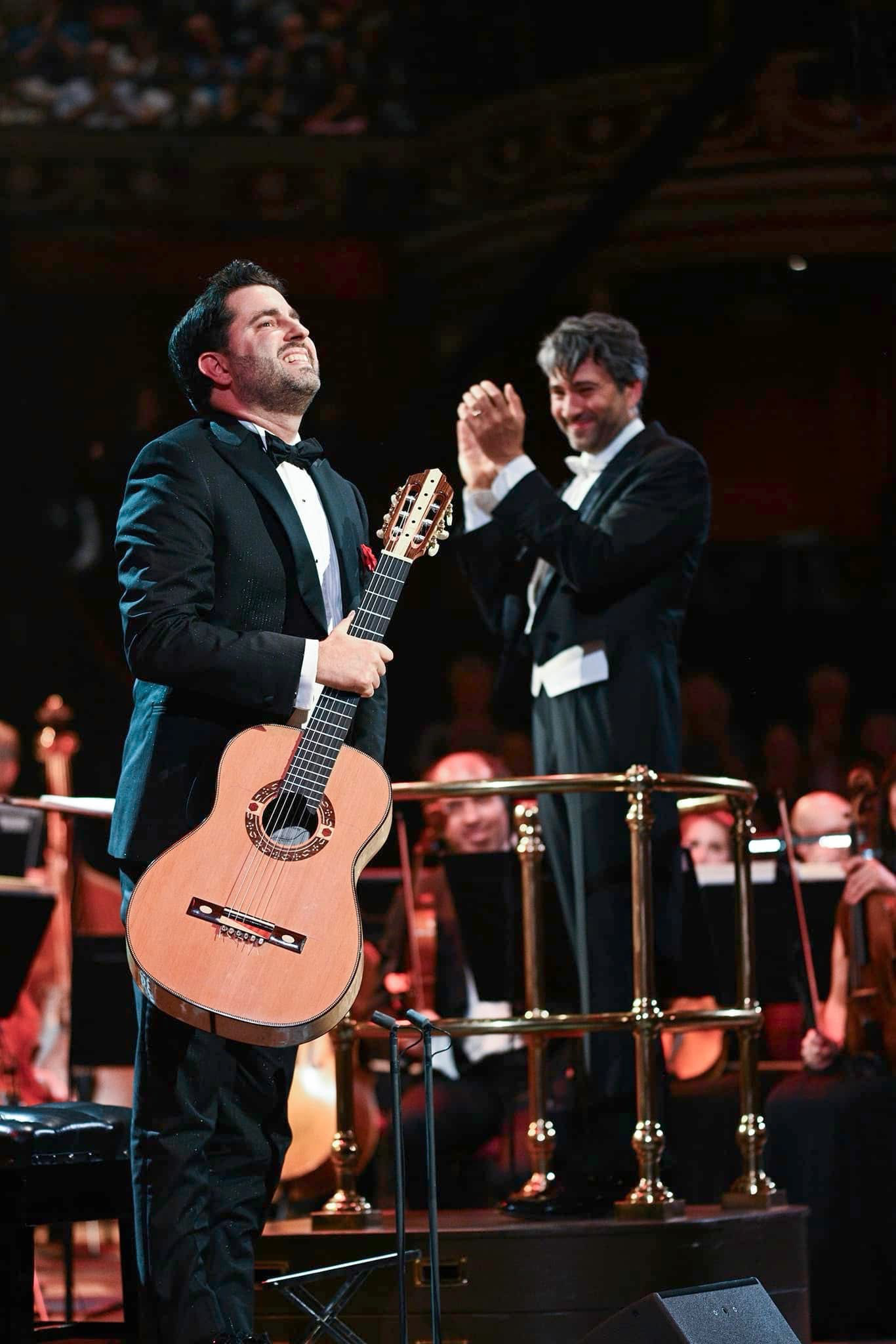
Rafael: I’m very good friends with Cañizares as well. And Simon Rattle, you know, is one of my favourite conductors. He was a percussionist and you feel that when he conducts. He’s one of the most rhythmic conductors. That performance of the Aranjuez was so good and the climax; he’s such a good musician. In the Rodrigo, when you can feel the rhythm and the pulse, you already have 85 per cent of the interpretation. With the Concierto de Aranjuez you need this sparkling element, every time you finish a scale passage, it’s like opening a bottle of champagne. This is always a challenge.
The Concierto de Aranjuez by Rodrigo has not been played very often at the BBC Proms?
Rafael: Yes, Julian Bream was the first to play the Concerto de Aranjuez at the BBC Proms in 1955 and again in 1956. Bream played it again in 1989 and then, in 1996, John Williams played it with the Spanish Youth National Orchestra, conducted by Edmon Colomer. Actually, the same conductor that Paco de Lucía played it with – he was the chief conductor in Malaga. Manuel Barrueco played it in 2001. In 2005, when John Williams played it on the Last Night of the Proms. I heard it live on Spanish National Radio Live; I thought it was amazing! John Williams was my idol when I was a child. If I’m any good at playing the guitar, it’s thanks to John Williams because I watched his Seville Concert video, filmed at the Alcázar Palace, every morning, before I went to school. I was observing and noting everything he was doing: Oh, he’s moving up the neck. I was learning by imitation, so he was a very big influence.

Just ten days before my BBC Proms performance on 19 July, I played the Concierto de Aranjuez in the Concertgebouw for the second time with the Orquesta Sinfónica de Tenerife and the Spanish conductor, Pablo González, who is going to be the next conductor and music director in Paris, for the Orchestre national d’Île-de-France. People are often asking me: How do you get concerts? How do you get a manager? But, no, a manager does not make a career for you. Of course it helps, but as a guitarist you need to do many things. It’s a matter of you showing up, meeting people, posting things, playing well, and then you have the moments of luck. This is how all my big debuts came about, including my BBC Proms debut with the Concierto de Aranjuez – everything has been ‘by accident’: just because the Proms director, Hannah Donat, had heard about me.
Managers don’t really know what to do with us guitarists because you only have the Rodrigo in the programmes with orchestras and the recitals. People organising big music festivals don’t think in terms of a guitar recital. Their response is often: ‘Oh, is that possible? Can you play more than one movement by Bach?’
People do ask me whether I get tired of playing the Concierto de Aranjuez? I know some violinists who say they don’t want to play Tchaikovsky Violin Concerto anymore, but then there are other violinists like Joshua Bell or Anne-Sophie Mutter, who recently played the Tchaikovsky Violin Concerto on tour with the London Philharmonic Orchestra. I don’t get tired of playing it, but of course, I would love to play other concertos as well.
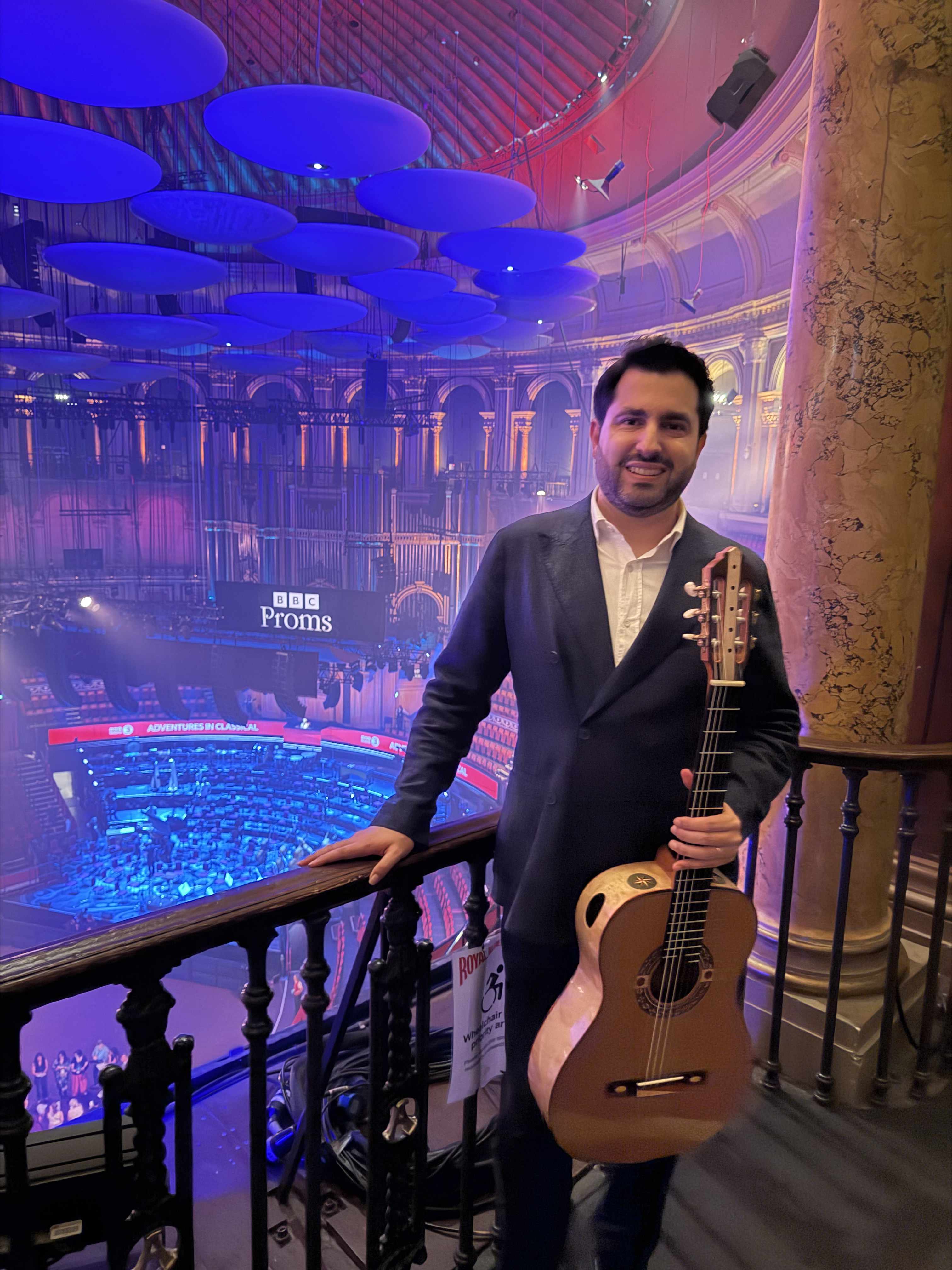
I will be playing the Chinese première of Brouwer’s Concerto de Toronto near Shanghai in March 2027 – his concerto number four by Brouwer, written for John Williams. When I was a child, I was living in a small, tourist town, Mijas and we only had one CD shop in town. My father was very kind and would always buy me CDs by John Williams. John Williams’s playing was there in my house always, even more than Segovia and Yepes. It was easier to find his Sony recordings and it was the time that he was releasing all the Barrios. Then, one day my father came with The Black Decameron recording by John Williams, which features Brouwer’s Concerto No. 4 ‘Concerto de Toronto’, as well as Hika, In Memoriam Toru Takemitsu. For me, a 12-year-old boy who listens to Macarena or things like that on TV, suddenly, this sounded like ultra avant-garde music, after Sor and Turina. The London Sinfonietta, conducted by Steven Mercurio, played Concerto de Toronto. It was very well recorded and John Williams’ sound is incredible; it sounded like a piano.
When I heard John Williams’ Brouwer recording, I was impressed that you could play this kind of concerto on the guitar. So, since I was 12 or 13, I have loved this concerto by Brouwer. I have studied with Joaquin Clerch, who comes from Cuba and was a student of Brouwer’s, so, I know a lot about the Cuban school. I know that Brouwer tried to write this concerto so that John Williams would make a mistake. And he was totally unsuccessful! Ligeti also tried that when writing his Etudes for the piano. Or Rodrigo, when he wrote Concerto para una Fiesta for Pepe Romero and he didn’t manage it. Of course, you cannot achieve that with Pepe Romero – he’s amazing.
Many years later, when I started playing regularly with orchestras, and working with agencies to see how the classical music establishment and programming worked, I didn’t think I would have the opportunity to play my two favourite concertos by Brouwer, Concerto de Toronto or the Concerto de Liege – except possibly at a guitar festival. Then suddenly, I got a call from a conductor friend of mine who had recommended me to play the Concierto de Aranjuez in China. As they had programmed the Concierto de Aranjuez three times already, they asked if I could play the Castelnuovo-Tedesco or a Brouwer Concerto? I said, yes, let’s do the Brouwer!
Manuel Barrueco once told me, sometimes when things are very easy, it’s not good. You need to wait in life – and then it’s great.
There are a few more performances of the Concierto de Aranjuez before the Brouwer.
Rafael: Yes, on 24 and 25 September 2026, I’m playing it with the Detroit Symphony Orchestra, which is also a world-class orchestra, in Michigan. It’s one of the oldest orchestras in the United States, even older than the Chicago Symphony Orchestra. I’m very excited because the hall is so beautiful: It’s red like Spain! The seats are red. And it will be broadcast also on their YouTube channel (Tickets).
Then, Rafael Aguirre will give three performances of Rodrigo’s Concerto de Aranjuez with the Tucson Symphony, conducted by José Luis Gómez (Tickets).
Rafael: I’m also preparing for the première of Alturas: Concierto Latinoamericano para guitarra y orquesta, which was written for me by Daniel Freiberg; he’s an Argentinian jazz pianist who lives in New York and plays a lot with Paquito D’Rivera. The première of the Concerto will be on Thursday 22 October 2026 with the São Paulo Symphony Orchestra, conducted by Thierry Fischer at the Sala São Paulo. He’s written so many flats and so many sharp notes and complex rhythms, crazy – it’s not Fernando Sor!
Copyright © 2026 Thérèse Wassily Saba

